

Hello Neighbor
- 1.8GBSIZE
4.5
- 4+AGE
Advertisement
Updated
April 15, 2025Platform
AndroIdCurrent Version
2.3.15Developer
tinyBuildSecurity
100% Safe
Advertisement
View Game Details
Verified antivirus
Get The GameDESCRIPTION
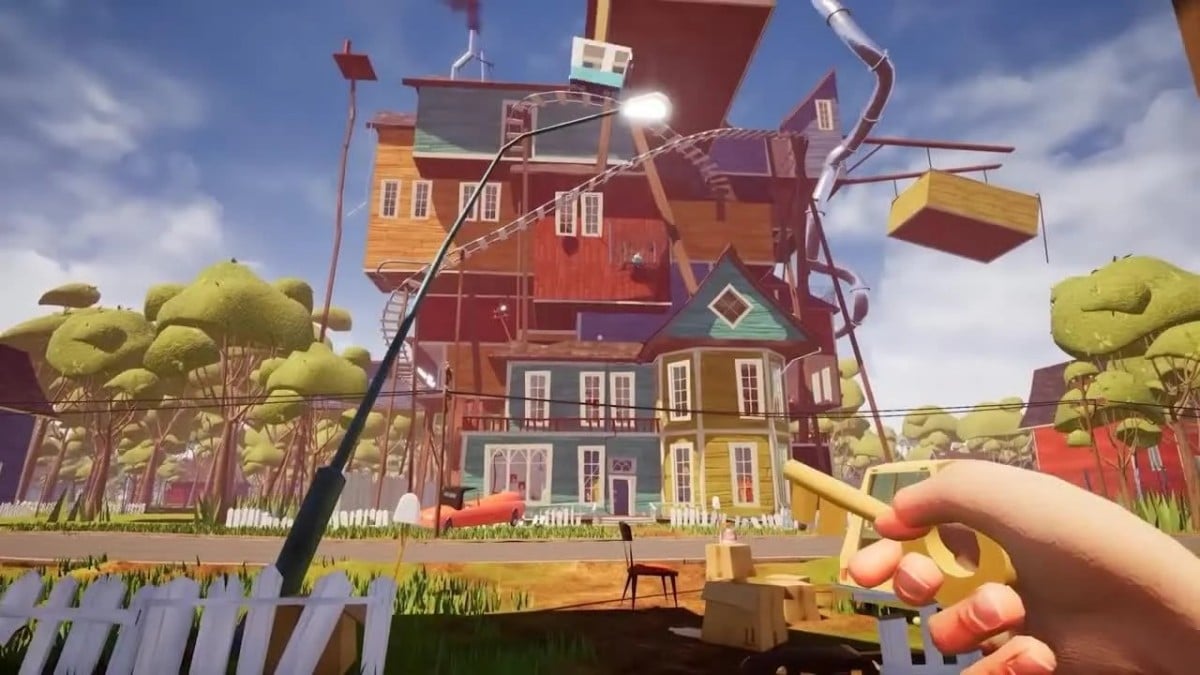
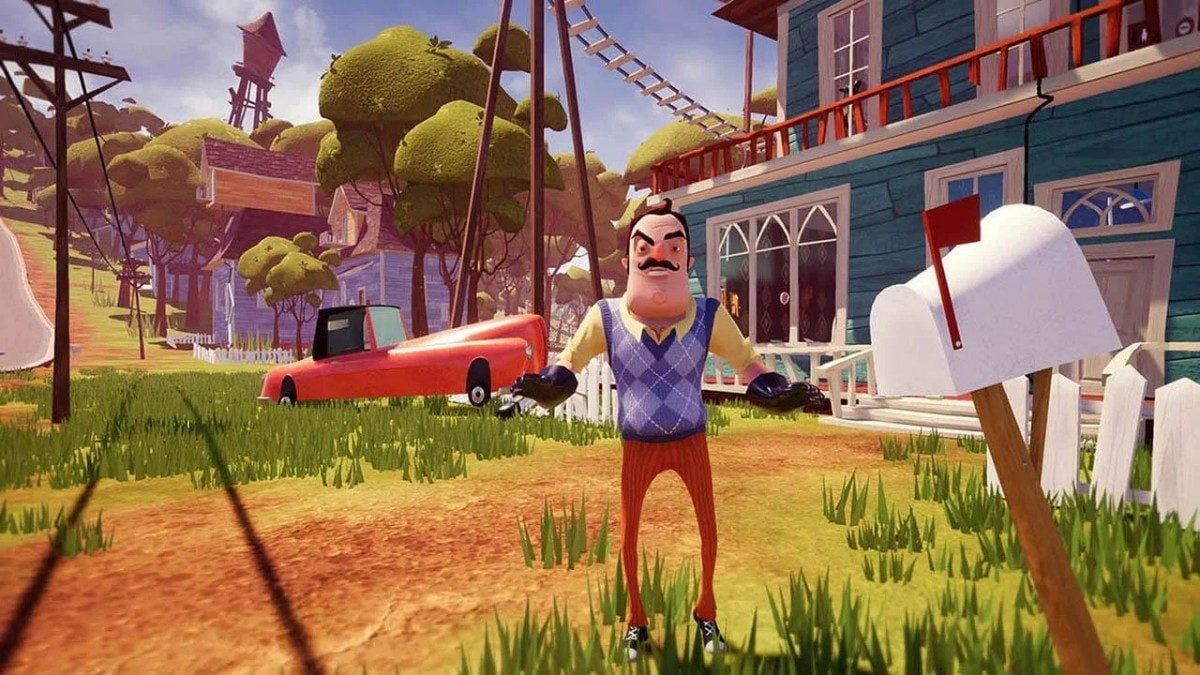
Imagine stepping into a sun-dappled suburban street, where white picket fences line neatly trimmed lawns, birds chirp from oak trees, and the air smells of freshly cut grass. It’s the kind of neighborhood you’d see in a 1950s sitcom—warm, welcoming, and seemingly perfect. But at the end of the block, there’s one house that doesn’t quite fit: a weathered two-story home with boarded-up windows, overgrown bushes, and a porch swing that creaks eerily in the breeze. This is the home of Mr. Peterson, your neighbor—and something is very, very wrong. His curtains twitch when you walk by. He never waves, never smiles, never steps foot outside except under the cover of darkness. And if you listen closely, late at night, you can hear faint, muffled sounds coming from his basement—a low whimper, a scraping noise, a distant cry that cuts off as suddenly as it begins. This is the world of Hello Neighbor, a game that doesn’t just scare you with jump scares or gory imagery; it preys on the one instinct we all share: curiosity. It asks a simple question—what happens when you peek behind the curtain of a neighbor’s secret?—and then traps you in a nightmare where every step you take, every door you open, and every sound you make could be your last. Since its debut in 2017, Hello Neighbor has captivated millions of players worldwide, defying genre conventions to become one of the most unique and unforgettable indie horror experiences of the past decade. It’s not just a game; it’s a psychological experiment, a puzzle wrapped in suspense, and a story about the cost of digging too deep into the unknown.
Developed by the Russian independent studio Dynamic Pixels and published by tinyBuild, Hello Neighbor emerged from humble beginnings. It started as a Kickstarter campaign in 2015, with a modest goal of $100,000 to fund development—a goal that, despite initial buzz, fell short, reaching only 10% of its target. Many indie games would have faded into obscurity after such a setback, but Hello Neighbor was different. Its core concept—sneaking into a neighbor’s house to uncover his dark secret, while evading a hyper-intelligent AI that learns from your every move—resonated with players long before the game was finished. Thanks to a partnership with tinyBuild, the team was able to release the game as an Early Access title on Steam in 2016, allowing players to experience the game in its unfinished state and provide feedback that would shape its final form. What followed was a phenomenon: despite its buggy early versions and rough edges, players couldn’t get enough. They streamed it, made fan art for it, and theorized about its mysterious story, turning a small indie project into a global sensation. By the time the full version launched in 2017, Hello Neighbor had already built a dedicated fanbase, and it has since spawned sequels, spin-offs (including the multiplayer hit Secret Neighbor), merchandise, and even a graphic novel. Its enduring popularity is a testament to its brilliance: it takes a universal fear—the fear of what lurks next door—and turns it into an interactive experience that feels both personal and terrifying.
What makes Hello Neighbor so compelling is its refusal to play by the rules of traditional horror games. In an era dominated by titles like Outlast and Resident Evil, which rely on grotesque monsters, graphic violence, and jump scares to shock players, Hello Neighbor takes a subtler, more insidious approach. There are no zombies, no ghosts, no blood-soaked corridors. The only “monster” is your neighbor, a large, imposing man with a bushy beard and a stern expression—ordinary, even mundane, at first glance. But it’s his ordinariness that makes him so terrifying. He’s not a supernatural entity; he’s a man with a secret, a man who will stop at nothing to keep that secret buried. This grounded horror is what sets Hello Neighbor apart. It taps into a primal fear: the idea that the people we live next to, the people we pass on the street every day, could be hiding something unspeakable. It’s the fear of the unknown made tangible, and it’s far more unsettling than any fictional monster.
The game’s visual style reinforces this sense of uncanny normalcy. Unlike most horror games, which use dark, muted color palettes to create a sense of dread, Hello Neighbor features bright, vibrant graphics that look like they’re straight out of a children’s cartoon. The neighborhood is bathed in sunlight, the grass is a lush green, and the houses are painted in cheerful pastels. At first glance, it looks like a game for kids—but that’s the trick. The contrast between the whimsical, cartoonish art style and the game’s dark, disturbing themes creates a jarring, disorienting effect. It’s like walking into a fairy tale that’s gone wrong, a place where the colorful facade masks something rotten underneath. This contrast is intentional: it lulls you into a false sense of security, making every moment of tension that much more intense. When you sneak into the neighbor’s house and see a locked basement door, or find a child’s doll discarded in a dark corner, the bright colors make the horror feel more real, more visceral. You’re not in a distant, haunted mansion—you’re in a house that could exist on any street, making the terror feel close to home.
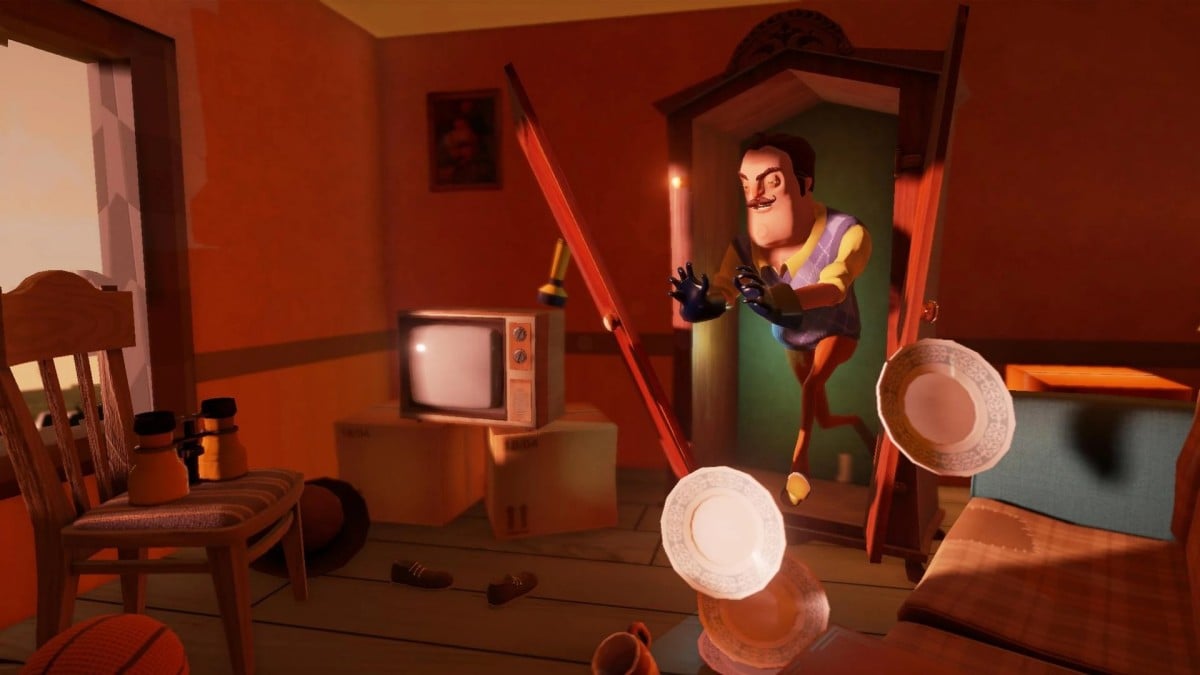
At its core, Hello Neighbor is a stealth puzzle game, but it’s unlike any stealth game you’ve ever played. The objective is simple: break into your neighbor’s house, explore its rooms, solve puzzles, and uncover the secret hidden in his basement. But the challenge lies in the neighbor himself—a hyper-intelligent AI that learns from your every move. This isn’t a scripted enemy that follows the same path every time; this is an AI that adapts, predicts, and outsmarts you. If you try to sneak through the front door, he’ll lock it. If you climb through a window, he’ll board it up. If you hide in a closet, he’ll check it next time. He remembers your tactics, learns your patterns, and uses them against you. It’s a cat-and-mouse game where the mouse is constantly changing its strategy, and the cat is always one step ahead. This dynamic AI is the heart of Hello Neighbor’s gameplay, and it’s what makes the game so replayable. No two playthroughs are the same; every attempt requires a new plan, a new approach, a new way to outwit the neighbor. It’s a game that rewards creativity and critical thinking, punishing players who rely on the same tactics over and over again.
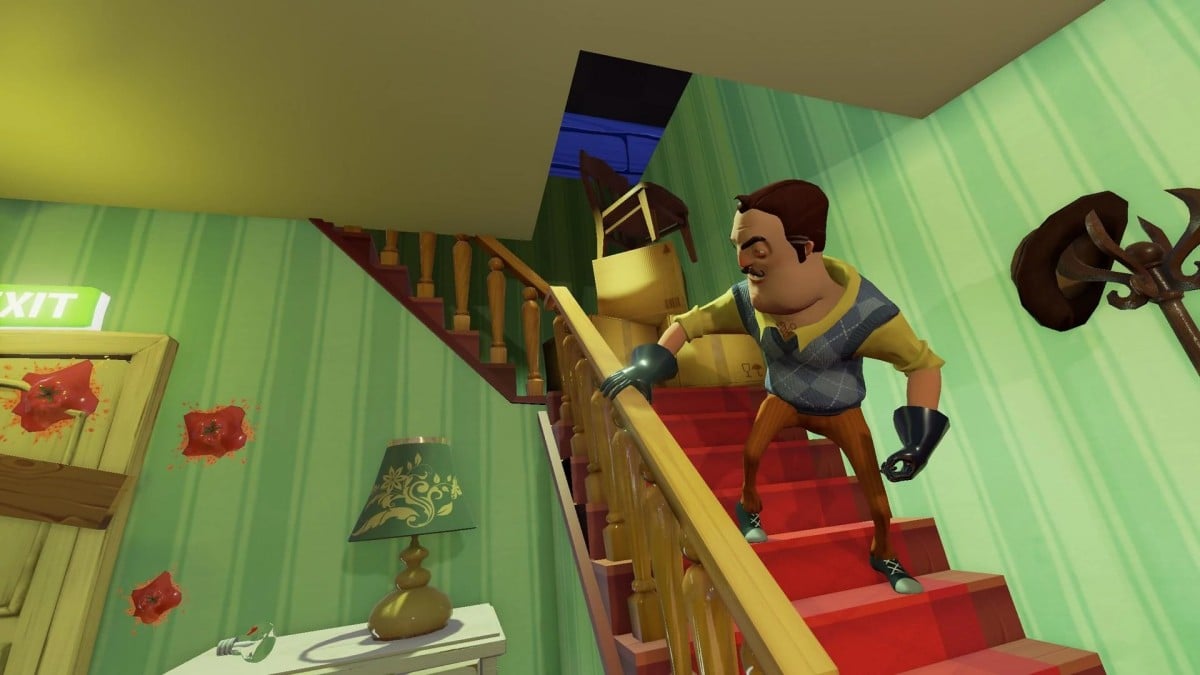
The neighbor’s house itself is a character in its own right. It’s a labyrinthine maze of rooms, hallways, and hidden passages, each filled with puzzles, traps, and clues. What starts as a small, seemingly ordinary house expands as you progress, revealing secret rooms, hidden staircases, and elaborate contraptions. One moment you’re sneaking through a kitchen, avoiding the neighbor’s line of sight; the next, you’re climbing through a ventilation shaft, navigating a maze of pipes and wires. The house is designed to feel alive, as if it’s working with the neighbor to keep you out. Doors lock behind you, floors creak when you step on them, and traps spring when you least expect it. Every room holds a new challenge, every corner hides a new secret. You might find a key hidden in a flower pot, a code scrawled on a piece of paper, or a lever that opens a hidden door. But nothing is ever easy. The neighbor is always nearby, his heavy footsteps echoing through the halls, his gruff voice growling when he spots you. The tension is palpable: every time you open a door, you hold your breath, wondering if he’s on the other side. Every time you make a sound, you freeze, listening for his footsteps. It’s a game that keeps you on the edge of your seat, your heart racing, your hands sweating—even when nothing scary is happening. The fear of being caught is more terrifying than being caught itself.
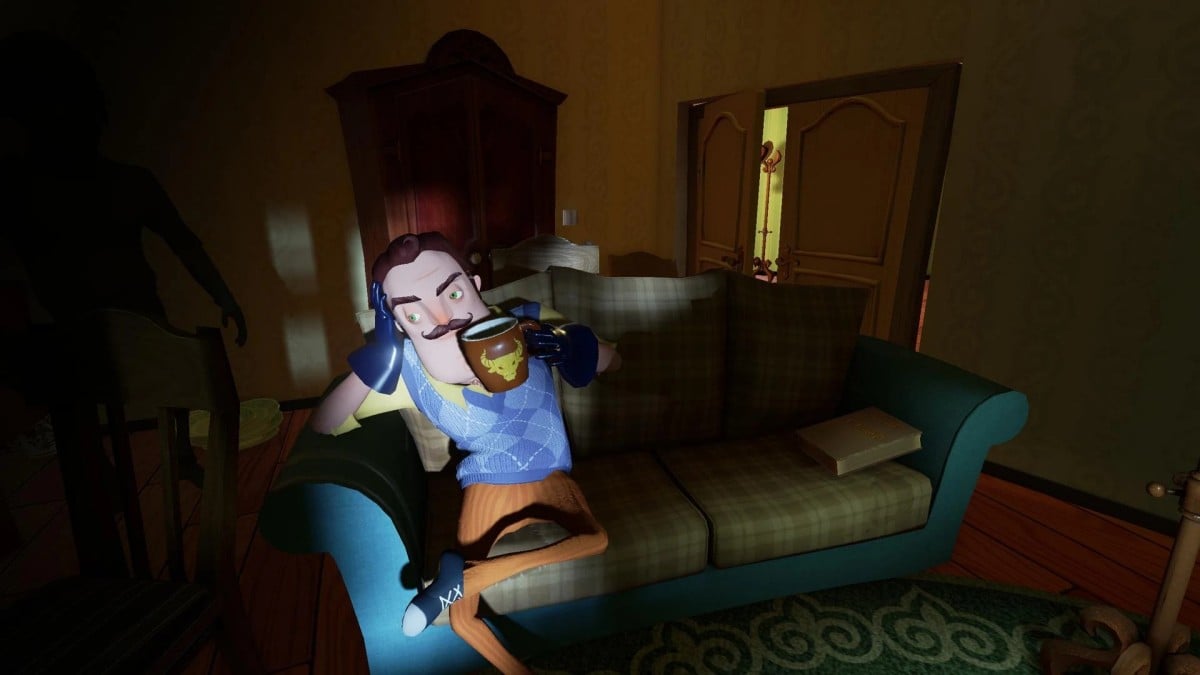
But Hello Neighbor isn’t just about stealth and puzzles; it’s about story. Unlike most horror games, which spell out their narrative through cutscenes and dialogue,Hello Neighbor uses environmental storytelling to slowly unravel its mystery. There are no NPCs to talk to, no text boxes to read, no cutscenes to watch. Instead, the story is told through the world around you: a crumpled newspaper article about a missing child, a family photo with one face scratched out, a locked chest filled with old toys, a tape recorder playing a child’s voice begging for help. These small, subtle clues paint a tragic and disturbing picture of the neighbor’s past—a past marked by loss, guilt, and a terrible secret. As you explore the house, you piece together the story bit by bit, each clue adding a new layer of depth to the neighbor’s character. You learn that he’s not just a villain; he’s a man broken by grief, a father who made a terrible mistake and will do anything to hide it. It’s revealed that the neighbor’s wife and daughter died in a car accident, and his son—consumed by guilt or madness—killed his sister, forcing the neighbor to lock him in the basement to protect him (and the world) from his actions. The game’s final act reveals that the entire experience is a dream—a childhood nightmare of the protagonist, who witnessed the neighbor’s tragedy and was haunted by it ever after. This twist adds a poignant, emotional layer to the game, turning a simple horror story into a meditation on grief, guilt, and the cost of secrets. It’s a story that stays with you long after you finish the game, making you question who the real villain is.
This narrative depth is what elevates Hello Neighbor beyond a simple stealth game. It’s a story about human nature, about how fear and grief can drive people to do terrible things. The neighbor isn’t a monster—he’s a man who made a choice, a choice that destroyed him and those around him. As you explore his house, you can’t help but feel a twinge of sympathy for him. You see his pain in the abandoned family photos, in the child’s toys scattered throughout the house, in the way he guards his basement like it’s the only thing he has left. It’s a complex, nuanced character study, something rare in horror games, which often rely on one-dimensional villains. This complexity is what makes the game so compelling. It doesn’t just ask you to fear the neighbor; it asks you to understand him. It challenges you to look beyond his intimidating exterior and see the broken man underneath. It’s a storytelling masterclass, using environmental clues to create a narrative that is both ambiguous and deeply emotional.
Another part of Hello Neighbor’s appeal is its accessibility. Unlike many horror games, which are designed for mature audiences, Hello Neighbor has a cartoonish art style and no graphic content, making it accessible to players of all ages. While it’s still terrifying, it’s a terror that’s appropriate for younger players—focused on suspense and tension rather than violence and gore. This accessibility has helped the game reach a wide audience, from kids playing on their phones to adults streaming on Twitch. It’s a game that can be enjoyed by anyone, regardless of their age or gaming experience. The controls are simple and intuitive: move with WASD, jump with space, interact with objects with E, and crouch with Ctrl. There’s no complex button combinations or steep learning curve; anyone can pick up the game and start playing. This accessibility has made Hello Neighbor a cultural phenomenon, with millions of players around the world sharing their experiences, creating fan theories, and making content about the game. It’s a game that brings people together, even as it scares them.
Of course, Hello Neighbor isn’t without its flaws. The early versions of the game were plagued by bugs and glitches, with the AI sometimes behaving erratically or getting stuck in walls. The puzzles can be frustratingly obscure, with no clear hints or guidance, leading many players to get stuck and give up. Some critics have also argued that the game’s story is too ambiguous, leaving too many questions unanswered. But these flaws are overshadowed by the game’s innovation and creativity. The developers have continued to update the game over the years, fixing bugs, adding new content, and improving the AI. They’ve also released sequels and spin-offs, expanding the Hello Neighbor universe and deepening its lore. Hello Neighbor 2, released in 2022, takes the core gameplay of the original and expands it, allowing players to explore a entire town filled with secrets and a new, even more intelligent AI.Secret Neighbor, a multiplayer spin-off, lets players work together to rescue a friend from the neighbor’s basement—while one player secretly plays the neighbor in disguise, adding a new layer of strategy and suspense.These expansions have kept the Hello Neighbor franchise fresh and exciting, ensuring that players keep coming back for more.
What makes Hello Neighbor truly unforgettable, however, is the feeling it evokes—the feeling of being a child again, curious and fearless, sneaking into a forbidden place. We’ve all been there: staring at a neighbor’s house, wondering what’s inside, imagining all sorts of dark secrets. Hello Neighbor takes that childhood curiosity and turns it into a nightmare, allowing us to live out that fantasy while experiencing the terror that comes with it. It’s a game that taps into our most primal emotions—curiosity, fear, guilt, and empathy. It makes us question our own motives: why do we want to uncover the neighbor’s secret? Is it because we’re curious, or because we want to judge him? Is it right to invade someone’s privacy, even if they’re hiding something terrible? These are the questions that Hello Neighbor asks, and they’re questions that stay with you long after you’ve finished playing.
Over the years, Hello Neighbor has become more than just a game. It’s a cultural touchstone, a symbol of indie game innovation, and a testament to the power of a simple, compelling idea. It’s a game that has inspired countless fan works, from fan art and fan fiction to YouTube videos and streams. It’s a game that has brought joy and terror to millions of players around the world, regardless of their age, background, or gaming experience. It’s a game that proves that you don’t need a big budget or a famous studio to create something unforgettable—all you need is a great idea, a lot of passion, and a willingness to take risks.
So, if you’re looking for a game that will keep you on the edge of your seat, challenge your mind, and stay with you long after you’ve finished playing, look no further than Hello Neighbor. It’s a game that turns curiosity into terror, a game that makes you question everything you think you know about your neighbors, and a game that reminds you that the scariest things in life are the ones we can’t see—the secrets hidden behind closed doors, the pain buried in the past, and the fear of what happens when we dig too deep. As you step onto that sun-dappled suburban street, as you stare at the neighbor’s house, as you take that first step toward uncovering his secret, remember: curiosity killed the cat. But in Hello Neighbor, curiosity might just kill you.
Whether you’re a seasoned horror fan or a casual gamer looking for something new, Hello Neighbor has something to offer. It’s a game that defies expectations, breaks genre conventions, and creates an experience that is both terrifying and emotional. It’s a game that you’ll never forget—a game that will make you think twice before looking through your neighbor’s window again. So, grab your controller, turn off the lights, and get ready to sneak into the unknown. The neighbor is waiting. And he’s not happy to see you.
Screenshots
Advertisement


